The Body I Am Still Trying to Recognise
By Sal How — Child and Youth Behaviour Specialist | Prevention, Connection and Capacity Building | Founder, Holding Ground Connections
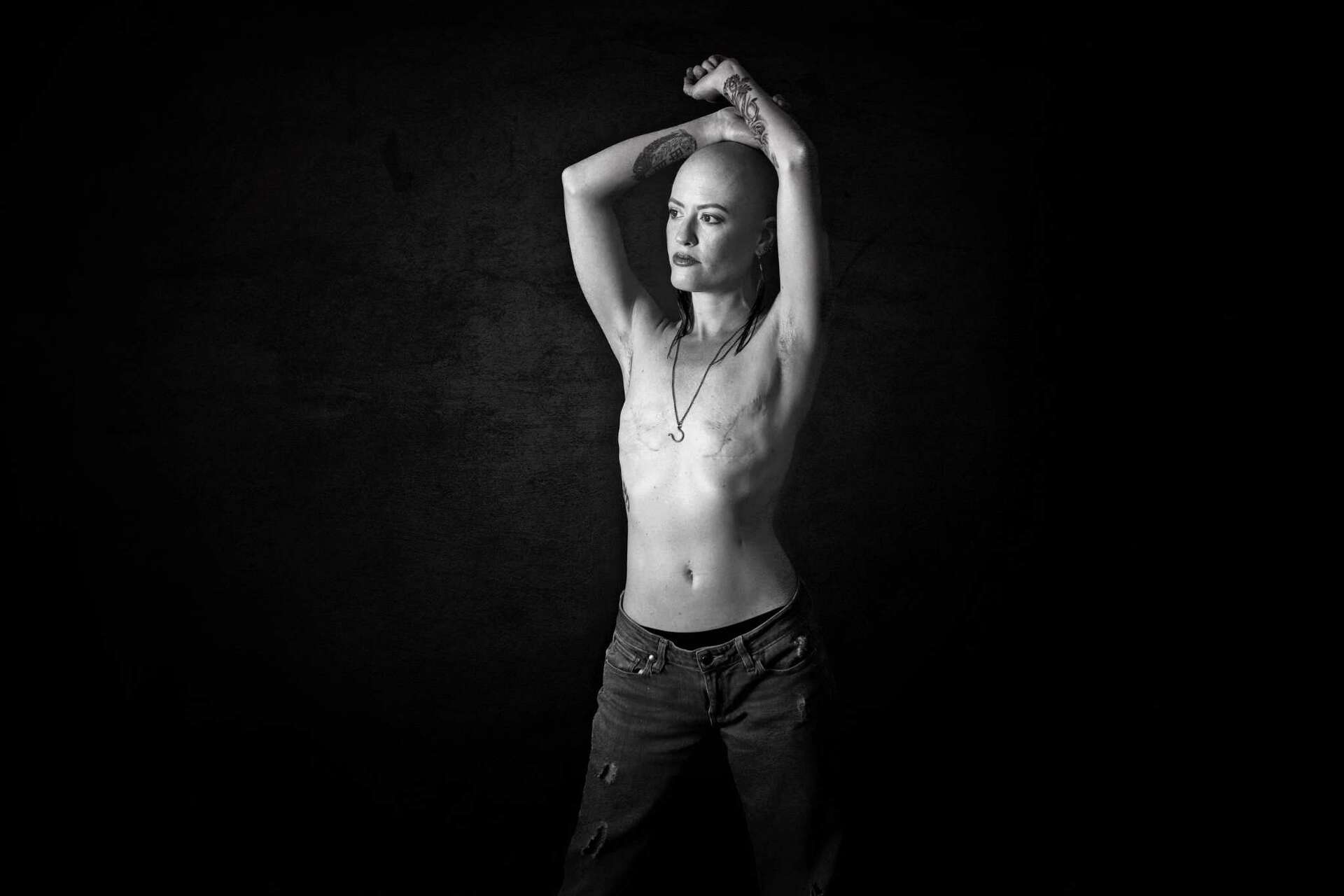
Photography: Nancie Jimenez / Nancie J. Photography
Women’s bodies are extraordinary.
They carry the human race forward. They stretch, bleed, grow, birth, feed, heal, scar and adapt. For many women, the body becomes the first home their children will ever know. And yet, despite everything women’s bodies do, so many of us spend our lives in complicated, painful and sometimes punishing relationships with them.
It has only been recently that I have started to reflect on this relationship in my own life. Not just the visible relationship: the one with weight, shape, breasts, scars, ageing and appearance. But the deeper one. The one shaped by hormones, pain, silence, dismissal, surgery, memory, identity and grief.
For most girls, this relationship begins long before they have the language for it.
Puberty in girls usually begins between the ages of 8 and 13. During puberty, the body makes more hormones, creating physical and emotional changes that can feel challenging, awkward, overwhelming and confusing. Girls often get taller, breasts develop, hips change, body shape shifts and periods begin. At the very same time, many are beginning high school and trying to work out who they are, where they belong and how they are seen. (Healthdirect)
I have often wondered whether this was poor planning, cultural blindness or simply another example of how little attention has historically been paid to female bodies. We send girls into a new school environment, with new social rules, academic expectations, uniforms, bathrooms, sport, friendships, crushes and comparisons, at the same time their bodies are being flooded with hormones and change.
It is also when words begin to stick.
A comment about weight. A joke about breasts. A remark from the boy or girl you like. A comparison in the change room. A teacher who dismisses pain. A parent who does not know what to say. A friend who seems to develop “better” or faster or more beautifully.
These things can become part of the internal script a girl carries for decades.
And then there is menstruation.
We still talk about periods as though they are simple, manageable, private inconveniences. But for many young people, they disrupt education, sport, concentration, confidence and dignity. Share the Dignity’s 2024 Bloody Big Survey found that students miss an average of six school days per year because of their period, rising to ten days for First Nations students. (Share the Dignity) Australian research based on a survey of 5,007 young women aged 13 to 25 has also highlighted how little published research focuses on menstruation in school settings, despite menstrual management being a significant issue for students. (Springer)
These are not small numbers. They are lost days. Lost learning. Lost confidence. Lost opportunities to be taken seriously.
For some girls, a painful period is not “just a bad period”. It is the beginning of endometriosis.
Endometriosis is a chronic condition that can be painful, affect fertility and reduce participation in school, work and sport. The Australian Institute of Health and Welfare describes it as historically under-recognised, with an average delay of six to eight years between symptom onset and diagnosis. (AIHW)
I was one of those girls.
Thirty years ago, my monthly period was often accompanied by vomiting, fainting and trips to hospital. I was told it was normal. I was told I was overreacting. I was told to suck it up.
That phrase follows women.
Suck it up at school. Suck it up at work. Suck it up when you are bleeding through your clothes. Suck it up when you are doubled over in pain. Suck it up when you are expected to perform beside men as though your body is not doing something entirely different.
There is an expectation placed on women from a young age: keep up, achieve, compete, behave, smile, do not be too emotional, do not be too affected, do not let your body become an excuse.
But what happens when your body is not an excuse?
What happens when it is the reason?
This is not only my story. It is woven through my family.
My grandmother spent much of her life in and out of mental health facilities. She was diagnosed with “hysteria”, a word that carries centuries of harm. Historically, hysteria was tied to women’s bodies, women’s emotions and, most disturbingly, the uterus itself. The National Centre for Mental Health notes that hysteria originated from the Greek word for womb and became a broad label used to explain women’s emotional and physical symptoms, often when medicine did not properly understand what was happening. In the Victorian era, it could become a default diagnosis for many physical and mental disorders, and treatment could include asylums. (NCMH)
It was not until my grandmother had a hysterectomy that she was released and able to live her life in the community. I cannot go back and diagnose her. I cannot know exactly what was missed, misunderstood or mistreated. But I know this: in my family, as in so many families, women’s pain and distress were not always investigated. They were labelled.
Six months after my grandmother’s hysterectomy, she was diagnosed with breast cancer. She died a couple of years later.
I think about that often.
I think about how many women have been dismissed as emotional, unstable, dramatic or difficult when their bodies were trying to tell a story medicine had not yet learned to hear.
For me, relief did not come until I had a hysterectomy at 34. By then, I had endured 12 laparoscopic surgeries. The impact on my life was significant: physically, emotionally, professionally and financially. It affected my ability to get ahead. It affected my confidence. It affected my sense of what my body could be trusted to do.
My ovaries were saved, but my body still seemed to go into hormonal withdrawal. It felt sudden and destabilising. At the time, I did not fully understand why.
I wish I had known then what I know now: even when ovaries are preserved, hysterectomy can affect ovarian function in some women. A systematic review and meta-analysis published in the Journal of Ovarian Research examined the effect of hysterectomy on ovarian function, using markers such as anti-Müllerian hormone, follicle-stimulating hormone and estradiol. (Springer)
No one explained that to me in a way I could carry forward.
Now, in my forties, I have been met with a challenge like no other.
About eight months ago, I began to feel lost. Words were hard to find. My memory seemed unreliable. I would reach for language and come up empty. I would walk into rooms and forget why. I felt as though my mind — the part of me I had always relied on — was beginning to fail me.
It is difficult to describe the fear that comes with that. It is not simply forgetfulness. It is the sense that you are becoming unfamiliar to yourself.
I started searching for answers. Eventually, I walked into a neurologist’s office. That was where I truly began to understand how deeply hormones affect the female brain.
My scans showed changes that my neurologist explained were less typical for my chronological age and more consistent with a woman who had gone through menopause. That was the moment I learned something I felt I should have been told years earlier: menopause is not just hot flushes and missed periods. It can affect the brain.
How did I not know this?
How was this not discussed?
The science is more nuanced than simply saying “the brain shrinks at menopause”, but research does show that menopause is a major neuroendocrine transition. A 2021 brain-imaging study published in Scientific Reports found substantial differences in brain structure, connectivity and energy metabolism across pre-menopause, perimenopause and post-menopause. The researchers also found evidence of adaptation, with some brain biomarkers stabilising after menopause and grey matter volume recovering in key cognitive regions. (Nature)
In other words, menopause is not simply decline. It is change. It is transition. It is the brain and body responding to a major hormonal shift.
But for the woman living through it, it can feel terrifying.
The NSW Menopause Care Clinician Toolkit describes “menopause brain fog” as cognitive symptoms, most often affecting memory and attention, experienced around menopause. It notes that research validates women’s cognitive complaints, and that while these changes can be distressing, they generally do not indicate dementia. (Agency for Clinical Innovation)
That validation matters.
Because when a woman in her forties says, “I don’t feel like myself,” she is too often told she is stressed, tired, anxious, busy, dramatic or ageing badly. We reduce her symptoms to personality, lifestyle or attitude before we consider biology.
But hormones are biology.
I started learning what I had never been taught properly: estrogen is not only about reproduction. Hormonal changes in perimenopause and menopause can affect sleep, mood, temperature regulation, muscles, joints, bones, bladder function, energy and cognition. Menopausal hormone therapy, often still called HRT, can be a safe and effective treatment for symptoms caused by low hormone levels, and may also help with sleep, mood and bone strength. (Department of Health)
I needed HRT.
But nothing about my situation was straightforward.
I had a family history of breast cancer. My breasts were extremely dense. I was already undergoing regular imaging: MRIs, ultrasounds and mammograms. Dense breast tissue matters because the higher the level of breast density, the harder it can be to detect breast cancer on a mammogram; breast density can also slightly increase breast cancer risk, although it is only one of many factors in a person’s overall risk. (Department of Health)
The data around HRT and breast cancer is complex. Risk depends on the type of hormone therapy, a woman’s medical history, her age, her uterus status, her family history, the duration of treatment and her individual risk profile. Cancer Australia states that combined estrogen-progestogen menopausal hormone therapy is associated with an increased risk of breast cancer, and that the risk increases the longer combined therapy is used. (Cancer Australia)
But my situation was not an abstract risk discussion.
In my particular clinical circumstances, I was told I could not have HRT unless I had a mastectomy. And if I did not start HRT, I was told my cognitive functioning was expected to continue to deteriorate.
It was not a general menopause decision. It was not a simple lifestyle choice. It was not about chasing youth. It was my brain or my breasts.
For me, the decision was clear. That does not mean it was easy.
I found an endocrinologist. I started hormone treatment. I also began the journey toward a double mastectomy with reconstruction.
In that process, I learned more about women’s health than I had ever been taught in school, in doctors’ rooms or in all the years of living inside a female body. I learned about hormones, bone health, muscle, cognition, metabolism and risk. I learned about creatine, too, something I had always associated with gym culture, not women’s health.
Research into creatine and women is still developing, but a 2021 review in Nutrients noted that evidence for creatine use among females remains understudied. The review reported that females have lower endogenous creatine stores than males and that creatine supplementation may have relevance across the female lifespan, including during and after menopause. It also discussed potential benefits for strength, muscle function, mood and cognition, while making clear that more research in women is needed. (MDPI)
The more I learned, the angrier I became.
Not because I expected medicine to have every answer. But because I realised how many women are left to discover basic information about their bodies only after something has gone wrong.
I did not expect my body to be simple. I did expect to be warned. I did expect to be believed. I did expect women’s health to be treated as central, not niche.
What I did not account for was a failed reconstruction.
Losing my breasts has been one of the hardest things I have ever done. In the weeks after surgery, I cried every time I showered. I knew it would be hard, but knowing does not protect you from grief. It does not prepare you for looking down and feeling unfamiliar to yourself.
The loss of both my uterus and my breasts has been devastating.
Not because those organs define womanhood. I know that intellectually. I know a woman is not made by a uterus. I know she is not made by breasts. I know she is not made by fertility, motherhood, sex appeal or any other narrow measure the world tries to place on her.
But knowing something intellectually is not the same as feeling it in your body.
And I am not there yet.
They were part of my body. They were part of my story. They were part of my sexuality, my motherhood, my identity and my private sense of self.
Their absence has made me question what femininity means when the physical symbols we are taught to associate with being female are altered, removed or scarred.
It seems unfair that any woman should feel forced to choose between her body and her brain.
And yet, my cognitive function has improved.
I am grateful for that. I am relieved. I can find words again. I feel more present. I feel more like myself.
But grief and gratitude can live in the same body.
Women know this well.
We live in bodies expected to hold contradiction. We are told our pain is normal, but our emotions are too much. We are told to embrace ageing, but not to look old. We are told breasts are not what make us women, yet the loss of them is treated as either cosmetic or courageous, with little room for the messy truth in between. We are told menopause is natural, but we are not properly educated about what it can do to the body, mind and identity.
Women’s health has too often been under-researched, underfunded and misunderstood. A 2025 Monash University report found that only 3.3 per cent of Australian government research funding in 2023–24 was dedicated to women’s health, leaving many conditions underfunded and poorly understood. (Monash University)
That figure should stop us.
Because women are not a special-interest group. We are half the population. Our bodies are not unusual versions of male bodies. Our pain is not a footnote. Our hormones are not hysteria. Our symptoms are not inconvenience. Our ageing is not failure.
I do not want younger women to discover their bodies the way I did: through pain, dismissal, surgery and crisis.
I want girls to know when period pain is not normal. I want them to know that vomiting, fainting or missing school because of their period should trigger care, not shame. I want parents and teachers to understand that menstruation can affect learning, concentration and attendance. I want doctors to listen earlier. I want women in their thirties and forties to understand perimenopause before they think they are losing their minds.
I want menopause to be discussed not as a punchline, but as a whole-body transition deserving research, respect and treatment.
Most of all, I want women to be believed.
For now, I am living in the in-between: grateful that my mind is returning, devastated by what it cost, and trying to find a way to recognise the body that carried me here.
My body has changed many times. It has bled, grown, endured, been cut open, stitched, scanned, medicated and reconstructed. Parts of it are gone. Parts of it are scarred. Parts of it still feel foreign to me.
I cannot yet say I feel whole. I cannot yet say I feel feminine in the way I once understood that word. I cannot yet say I have made peace with what I have lost.
Maybe that will come.
Maybe it will not come all at once.
For now, I am living in the in-between: grateful that my mind is returning, devastated by what it cost, and trying to find a way to recognise the body that carried me here.
Note: This article shares one woman’s lived experience and should not be read as medical advice. Decisions about hysterectomy, hormone therapy, mastectomy, breast cancer risk, supplementation or menopause treatment should be made with qualified medical specialists who can assess individual risk, history and symptoms.
Written by
Sal How
Founder, Holding Ground Connections · Child and Youth Behaviour Specialist · Prevention, Connection and Capacity Building